Puzzle
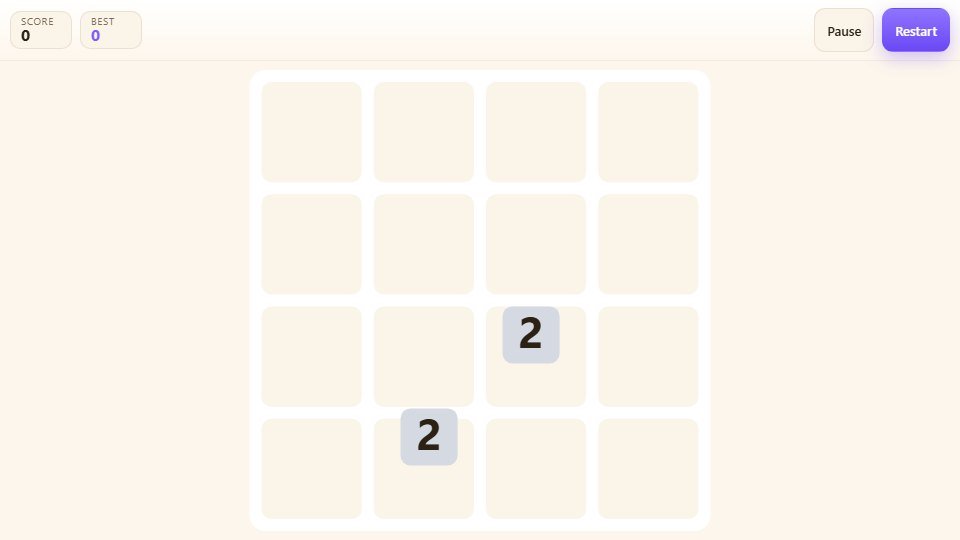
2048 Blocks — Merge the Numbers
Two tiles, one thumb. Slide the board, merge the twins and build a 2048 block before the grid fills up.
Sixteen cards face down, eight pairs to find. Every flip shows how much attention you were actually paying.
Memory Match is the cleanest expression of a genuinely useful skill. Cards sit face down in a grid, you turn over two at a time, and matching pairs stay revealed. Clear the board in as few moves as possible. Beneath the simplicity is a real exercise in working memory — holding the position of several cards in mind while you test new ones — and because the grid grows with difficulty, the challenge scales without ever changing the rules.
Memory Match lays out a set of face-down cards and asks you to find every matching pair by turning two at a time. It sounds like a children's game until about the fourth turn, when you realise the real challenge is holding a dozen positions in your head while simultaneously deciding which unknown card is worth risking.
Every opening move should be treated as reconnaissance rather than an attempt to score. Flipping two cards you have never seen costs you nothing if they do not match, and rewards you with two known positions. Players who rush the opening and only flip cards they remember are the ones who run out of moves toward the end, because they never built a mental map to begin with.
Most people try to remember the picture. It is far more reliable to remember locations — top-left row shows a shape, bottom-right corner shows a colour — because positions are fixed while your visual memory of an icon fades within seconds. Tracking two or three locations per row is enough to clear a board without hesitation.
If you know one card of a pair and its partner is unknown, flipping into the unseen cards is a calculated risk worth taking only when you have already secured the pairs you remember. Spend your certainties first, then use the leftovers to explore. Doing it the other way around is how a winnable board turns into a scramble.
There is no timer and no penalty for a wrong pair, so the game moves at whatever pace you set. That makes it a comfortable break for anyone who wants to switch off from a screen full of text, and a genuinely useful warm-up for players heading into Simon Says, where the same short-term memory does all the work.
Who it suits: Ideal for a short break, for playing with a child, and for anyone who wants a game that leaves them sharper rather than more scattered.
No. Nothing counts down and a wrong pair costs you only the two turns, never a penalty. You can take as long as you like on any decision, which makes it suitable for young children as well as adults.
Yes. Card positions are randomised each time you start, so you cannot memorise a fixed layout and replay it. That keeps each round a genuine test of attention rather than pattern recall.
Comfortably. Taps are single and precise, the cards are large enough to hit reliably, and nothing requires dragging or a second finger, so it works well while holding a bag or a drink.
Clearing the board without a single wasted pair is the ideal. In practice, most players finish within a handful of extra turns, and reducing that gap is where the improvement happens.
It is one of the best games here for younger children. There is nothing to read, no way to lose permanently, and it teaches turn-taking and pattern recognition in a way that feels like play rather than a lesson.
Yes, the grid grows. A small board is a warm-up and a large one is genuinely demanding, so the same game serves a five-year-old and an adult without either feeling patronised.
memory matching brain training tap pairing casual
Two tiles, one thumb. Slide the board, merge the twins and build a 2048 block before the grid fills up.
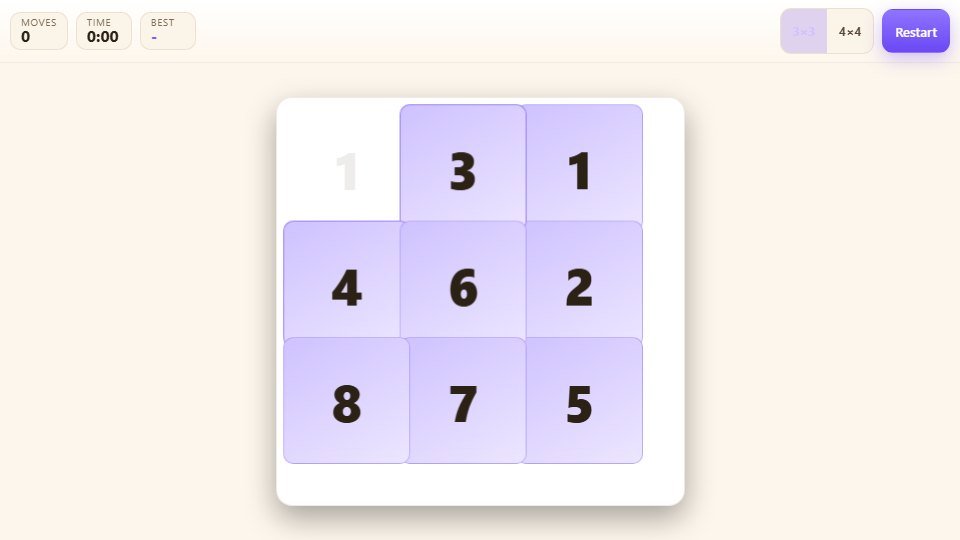
One empty square is all the room you get. Shuffle the digits back into order with as few moves as you can manage.
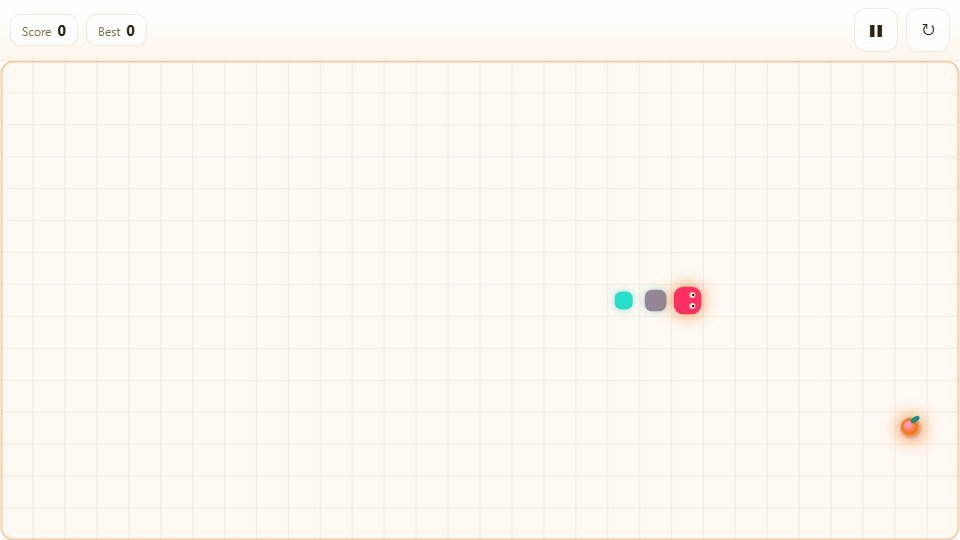
The oldest rule in arcade gaming: every pellet makes you longer and every turn gets tighter. How long can you hold on?