Puzzle
2048 Blocks — Merge the Numbers
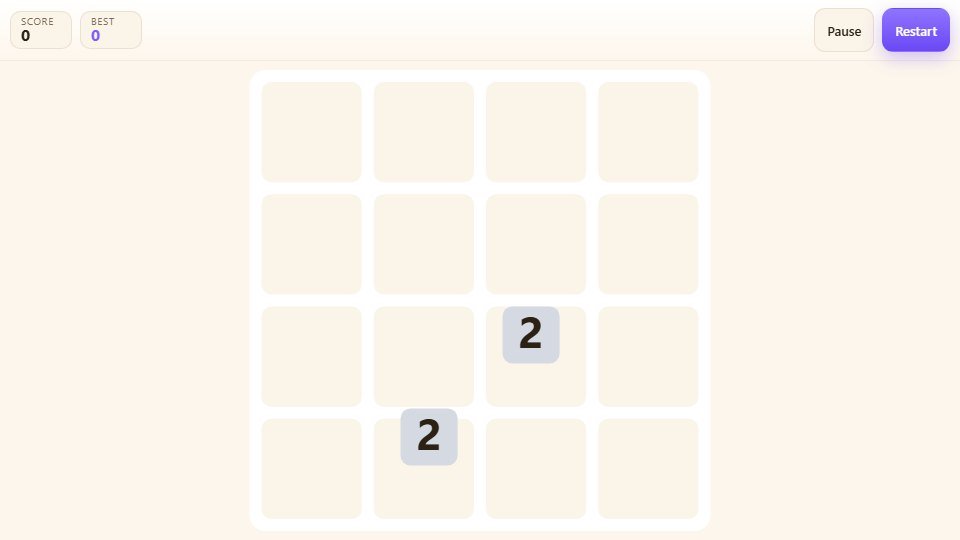
Two tiles, one thumb. Slide the board, merge the twins and build a 2048 block before the grid fills up.
One empty square is all the room you get. Shuffle the digits back into order with as few moves as you can manage.
The sliding puzzle is older than the telephone, and it is still one of the most satisfying things you can do with five minutes. One square in the grid is empty, and you slide neighbouring tiles into that gap until the numbers run in order. It looks mechanical and turns out to be deeply strategic: every move you make to fix one tile changes the position of three others, and learning to see those consequences in advance is the entire game.
Sliding Puzzle gives you a numbered grid with a single gap and asks you to put the tiles back in order by sliding them into that gap. There is no hidden mechanic and no randomness after the shuffle — only you, a fixed number of moves, and a board that rewards anyone willing to think one step backwards instead of one step forwards.
Almost nobody struggles with the top two rows. The difficulty arrives in the bottom band, where the tiles you need are already in place and any careless slide undoes work you have finished. The fix is to build the bottom row in a specific order rather than filling it left to right, because the final two tiles cannot be placed independently of each other.
Trying to place tile 7 before tile 6 is a common trap. It is far more reliable to complete the top row as a unit, then the second row, then the two leftmost tiles of the third row, and finally the remaining block. Thinking in groups keeps the empty square available where you need it, instead of letting it wander to the far side of the board.
Sometimes the fastest route to a solution involves sliding a correctly placed tile out of position on purpose, opening a corridor so a larger group can rotate. Players who refuse to break a finished section often find themselves stuck with a solved top row and a tangled bottom half, unable to move anything without destroying progress above.
A finished board takes two or three minutes at most, which makes it easy to fit into a break. Nothing is timed, so the pressure is entirely self-imposed, and the same logic transfers directly to 2048 Merge, where planning space ahead is the whole skill.
Who it suits: Great for anyone who likes tidy, self-contained problems with a definite end. It works beautifully in short bursts because a single attempt rarely runs past a few minutes.
The shuffle is generated from a known solvable arrangement, so yes — there is always a valid sequence of moves. If a board looks impossible, the tiles have simply been pushed into a configuration that needs an unintuitive detour.
No limit is enforced. The move counter is there for your own reference, and finishing in fewer moves is treated as a better result rather than a requirement.
The board uses a fixed layout so that every player faces the same challenge. Starting a new game reshuffles it, but the grid itself stays consistent.
It can. Working from the finished arrangement backward shows you which moves are reversible, and that often reveals the single slide you were missing when you were stuck.
Not every random arrangement is solvable, but the puzzles you are given here always are. If you find yourself stuck, you can solve it — you are just holding the wrong empty-square route.
Stop solving tile by tile and start solving in pairs from the top down. Almost everyone who feels slow is losing time to the bottom half of the board, not the top.
sliding puzzle logic spatial tap numbers brain teaser
Two tiles, one thumb. Slide the board, merge the twins and build a 2048 block before the grid fills up.
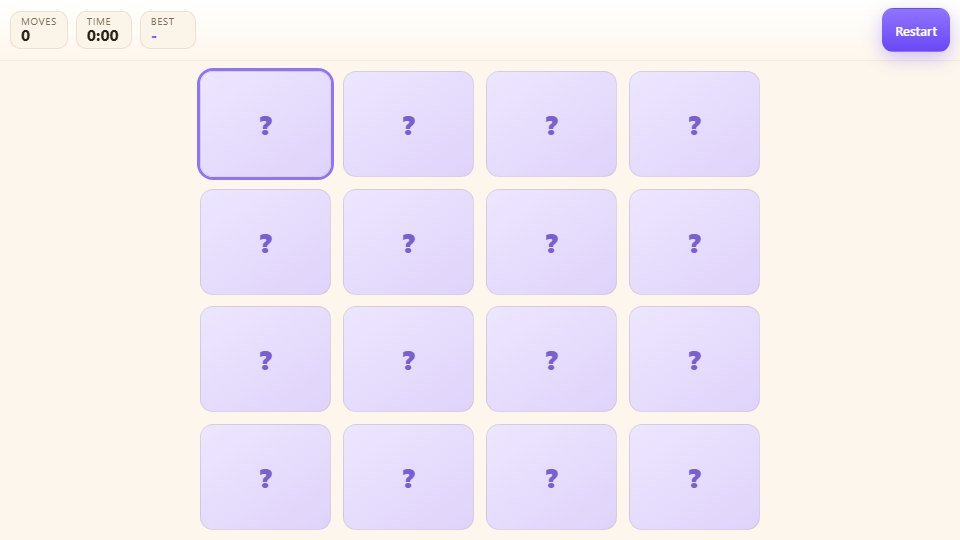
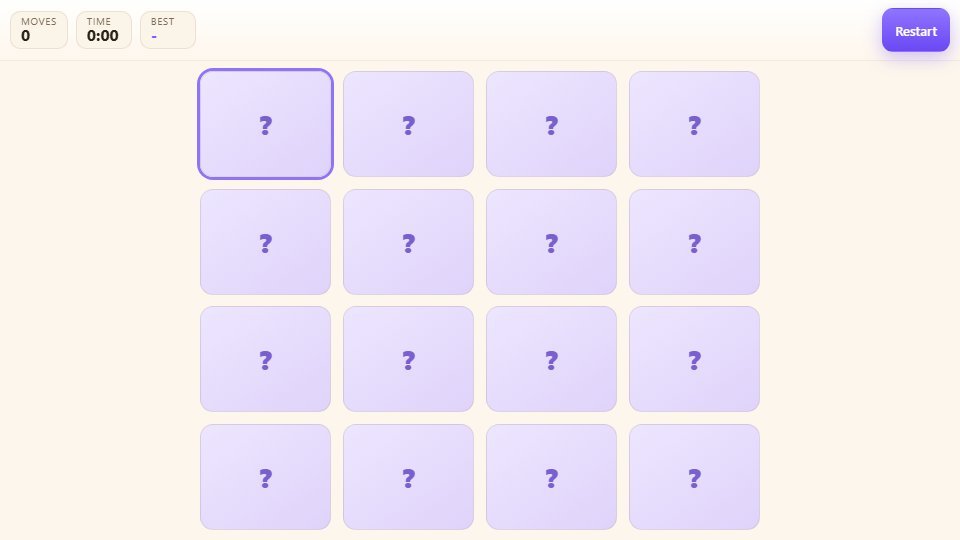
Sixteen cards face down, eight pairs to find. Every flip shows how much attention you were actually paying.