Multiplayer
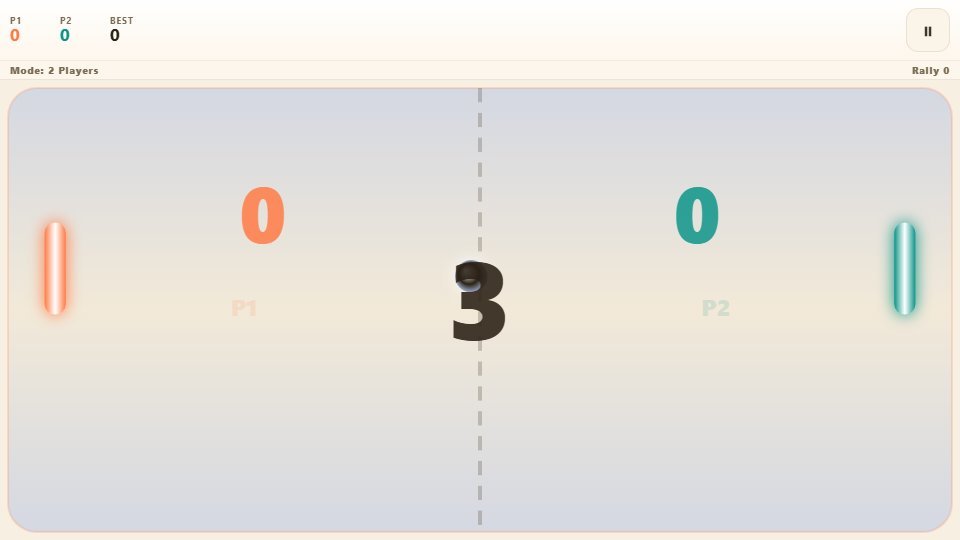
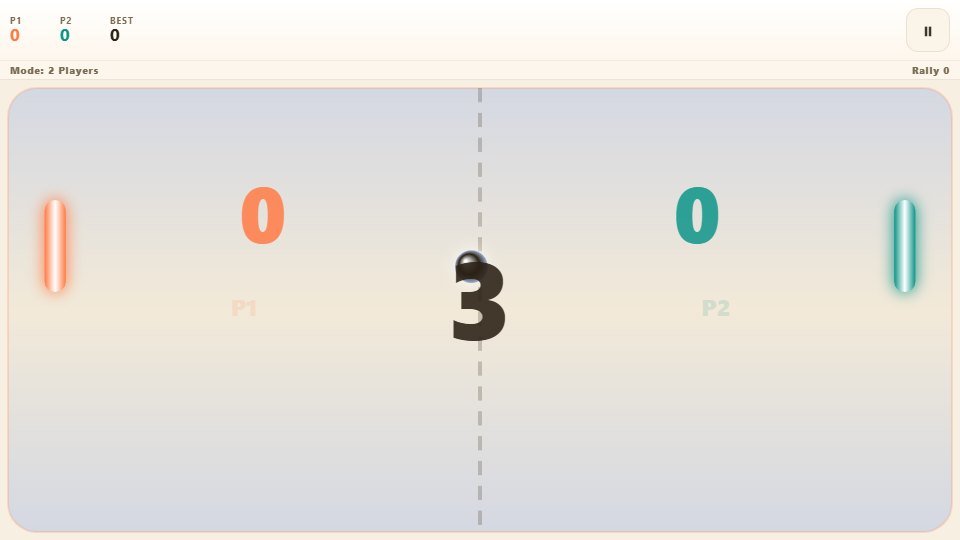
Pong Duel — Two Thumbs, One Phone
Share one screen, take one half each and race to seven. No controllers, no internet, no mercy.
Two mallets, one rink, one phone held between you. First to seven, and the puck does not slow down for anyone.
Air Hockey is the most physically satisfying game on this site. A puck slides across the table, you drag your mallet to intercept it, and the first to miss loses the point. In split-screen mode two players face each other on the same phone, each with their own half of the screen. It rewards reading the puck's line rather than chasing it, and that distinction is the whole skill of the game.
Air Hockey turns a phone or tablet into a shared table. Each player controls a paddle on their own half and tries to drive the puck past the opponent's goal line. Because both halves sit on one screen, the game becomes a genuine face-to-face contest rather than a lonely score chase.
The natural setup is to place the device flat between two people, one controlling the top half and one the bottom. That orientation changes the game entirely — you can see your opponent's hand moving, which turns it into a reading game as much as a reflex one.
Hitting the puck straight and hard is easy to defend because it travels along a predictable line. Angling your paddle so the puck rebounds off a side wall forces your opponent to move across their goal and creates a gap on the opposite side. The walls are a tool, not an obstacle.
Parking your paddle against the goal line feels safe and is actually the weakest position, because you have given up all forward pressure and can only react. Sitting slightly forward lets you intercept the puck earlier and return it before your opponent has reset.
No network, no accounts, no waiting for a lobby — just hand over half the screen. A match takes two or three minutes, which is perfect for a table at a cafe or a shared seat on public transport. If you want another head-to-head option, Pong Duel follows the same split-screen idea with a different pace, and Multiplayer holds the rest.
Who it suits: The best two-player split-screen game here, and the one most likely to produce a rematch. Loud, fast and genuinely funny to watch.
It is built for two, since the challenge comes from reading a live opponent. Playing solo is possible but removes the part that makes the game interesting.
Both work, though a larger screen gives each player more room to manoeuvre. On a phone the pace is faster simply because there is less distance to cover.
No. Matches end when you decide they end, so you can play to a set score or simply stop when the queue reaches the front.
The halves stay fixed during a match. If one side feels easier, swapping places between matches is the fairest way to settle it.
Each player takes one half of the screen and drags their own mallet. Because both halves are separate, neither player blocks the other's view, and the phone becomes a two-player table.
Not at all. The rule is simply that the puck must not get past you. Improving is a matter of positioning rather than reflex, which is why beginners can be competitive within a few games.
air hockey two player split screen multiplayer physics pass and play
Share one screen, take one half each and race to seven. No controllers, no internet, no mercy.
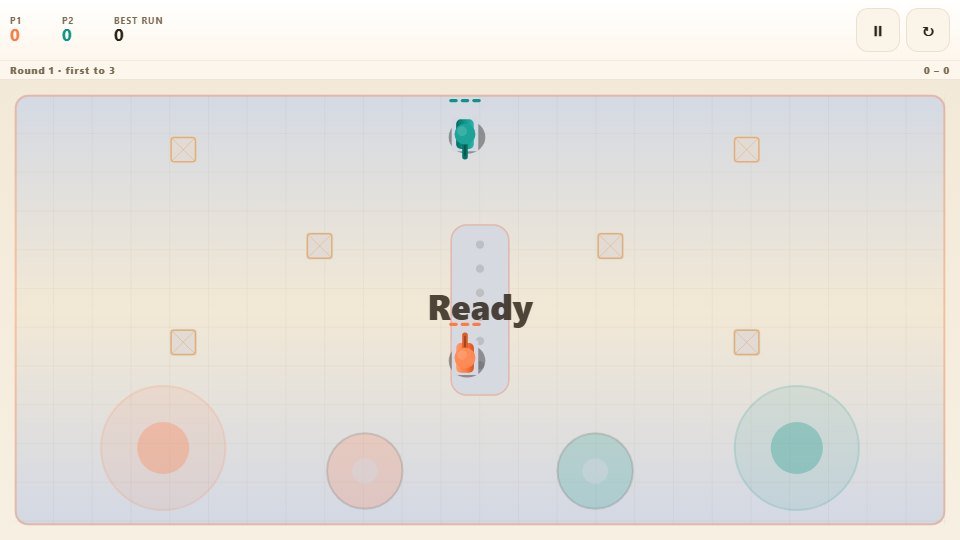
Two tanks on one screen, shells that bounce off walls, and a best-of-three that always ends in an argument.