Racing
Lane Weave — Four Lanes of Traffic
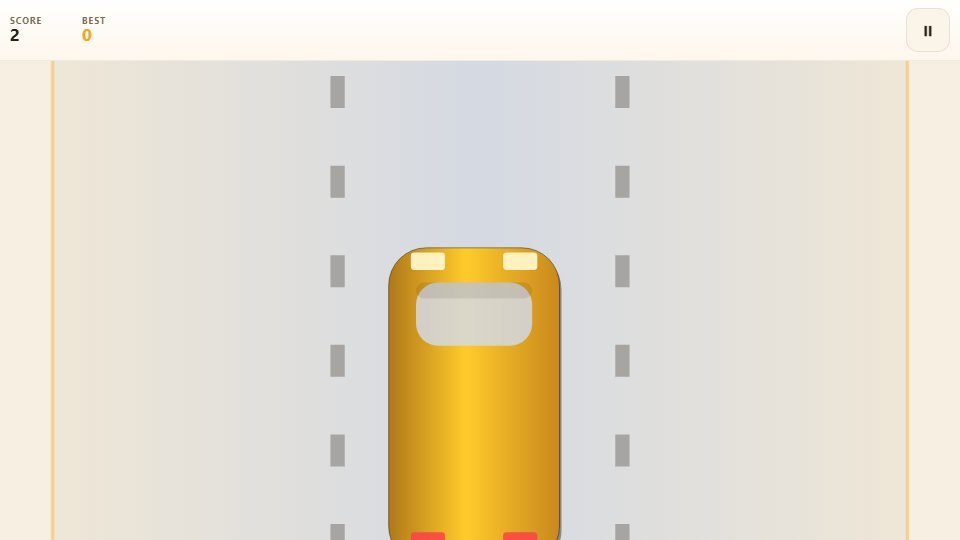
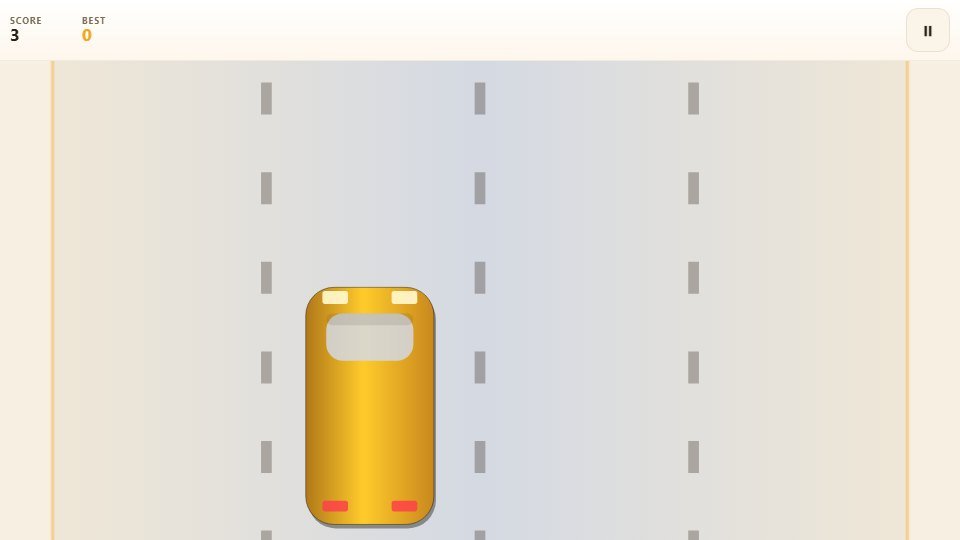
Four lanes, no brakes and traffic that does not care. Squeeze through the gaps and cash in on every near miss.
Three lanes of trucks, cones and oil slicks. Hold the wheelie for a boost — but only where the road actually lets you.
Moto Dash swaps four wheels for two and adds a throttle you actually control. Rather than fixed traffic lanes, you are watching a road that rewards nerve: hold your speed through a gap and you gain ground, ease off and you stay safe but slow. It is the racer on this site that asks for the most judgement, and the one that feels best when you get a run together.
Moto Dash takes the highway formula and strips it down to a motorcycle, which in practice means less room to manoeuvre and less tolerance for a mistake. The same traffic-reading instinct applies, but the machine responds faster and punishes a late correction harder.
A bike changes direction more sharply than a car, which is an advantage you have to earn by treating it carefully. Small, early leans keep the line smooth; a sudden hard lean at high speed is the single most common way runs end. Start the movement before you think you need to.
Riding along the extreme edge feels safer but removes your options, since one side is now a barrier. Traffic in the centre lanes still gives you two directions to escape into, and having two escapes is worth more than having a wider gap on one side.
Going flat out feels correct and shortens every run. Easing just slightly when traffic thickens gives you a fraction more time to read the next gap, and that fraction is usually the difference between continuing and crashing. Slower riders regularly set longer distances.
A run lasts as long as you survive, and restarting is immediate, so there is no downtime between attempts. It sits comfortably alongside Highway Racer and Turbo Lane for anyone building a short racing session, and the rest of the Racing shelf works the same way.
Who it suits: For players who find lane-switching racers too passive and want something with a genuine risk-and-reward decision in every second.
It is less forgiving rather than strictly harder. The bike turns more sharply, so the same instinct works better, but a late correction that a car would survive will often end a motorcycle run.
The pace is continuous rather than boosted, so progress depends on how well you read the gaps rather than on pressing a speed button at the right moment.
Yes. Steering is a single-axis control, so one thumb is enough, which makes it practical on a crowded train or while holding something in the other hand.
There is no fixed benchmark since traffic density varies with how long you survive. Comparing your own best is the only meaningful measure.
Yes, deliberately. It gives you a throttle as well as a steering input, which doubles the number of decisions you make per second and rewards patience as much as speed.
Stop chasing maximum speed and start chasing clean runs. Most high scores come from surviving steadily rather than from a single reckless burst.
motorcycle racing tap combo traffic reflex
Four lanes, no brakes and traffic that does not care. Squeeze through the gaps and cash in on every near miss.
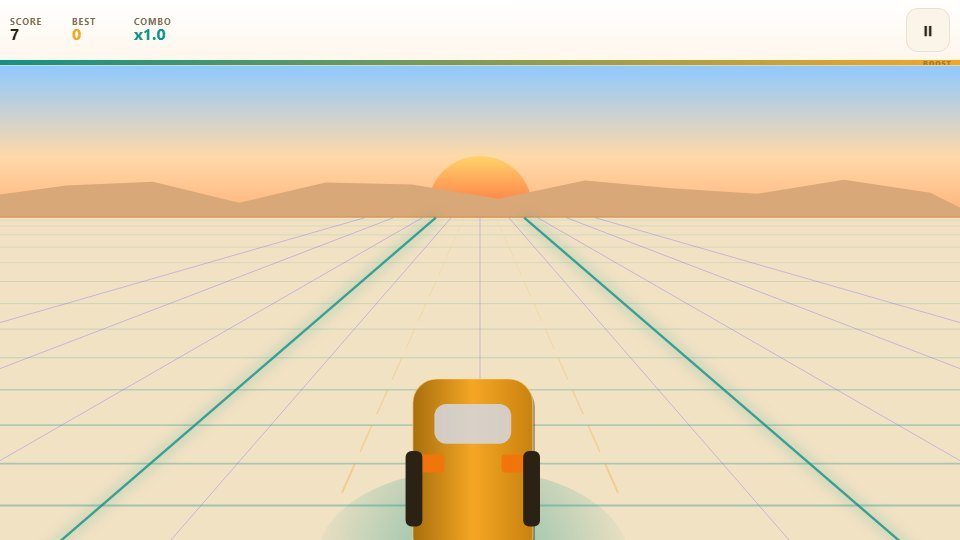
A neon road, a boost meter that empties fast and rivals who will not move over. Fill up on nitro and go again.